Builders Icon

Attic Mold Ocala and Gainesville Homes: Causes, Dangers, and Professional Removal Steps

Discover causes, signs, health risks, and professional removal steps for attic mold Ocala and Gainesville homes. Expert tips from North Florida Mold Remediators.

March 16, 2026

In the humid subtropical climate of North Central Florida, attics in homes across Ocala and Gainesville are among the most vulnerable areas for mold proliferation. With average relative humidity frequently climbing above 70-80% during the long summer months, combined with heavy seasonal rains from thunderstorms and occasional tropical systems, moisture accumulation in these enclosed upper spaces is almost inevitable without proper safeguards. What begins as minor condensation on roof sheathing or a small undetected leak can rapidly escalate into extensive mold colonization on wooden rafters, roof decking, insulation batts, and even HVAC components. This hidden growth often remains unnoticed until musty odors permeate living areas, energy bills spike from compromised insulation, or health symptoms emerge.

North Florida Mold Remediators proudly serves both Ocala in Marion County and Gainesville in Alachua County, providing expert mold remediation tailored to the unique challenges of our region's climate. Many local homes—whether older ranch-style properties in Ocala or mid-century builds near the University of Florida—feature attics with inadequate ventilation, making them prime candidates for mold issues. Even more mature neighborhoods, like Haile Plantation, that has homes as old as 25 years, are more susceptible to mold due to normal wear and tear. Understanding the causes, recognizing early warning signs, appreciating the associated risks, and knowing why professional intervention is essential can help homeowners protect their properties and families.

Attic mold Ocala: An image of an attic with mold on the underside of the roof decking and trusses.

Common Causes of Attic Mold Ocala and Gainesville

Florida's consistently warm temperatures and high ambient humidity create a perfect breeding ground for mold, but attics face amplified risks due to their isolation and exposure to environmental factors:

  • Inadequate attic ventilation — Insufficient soffit vents, ridge vents, gable vents, or powered attic fans trap hot, humid air. In North Central Florida, poor airflow fails to exhaust moisture generated from daily household activities or intense summer heat, leading to persistent damp conditions.
  • Roof leaks and storm-related water intrusion — Aging shingles, damaged flashing around chimneys or vents, or granule loss from hail allow rainwater—common during Ocala's frequent afternoon downpours or Gainesville's intense thunderstorms—to seep in and saturate wood and insulation.
  • Condensation from temperature differentials — Warm, moisture-laden air from living spaces (kitchens, bathrooms, laundry rooms) rises into the cooler attic, condensing on underside surfaces like roof decking. This is exacerbated when air conditioning runs heavily or when exhaust fans vent moist air directly into the attic instead of outdoors.
  • Improperly vented household appliances — Bathroom and kitchen exhaust fans in many older Marion and Alachua County homes dump humid air straight into attic spaces, accelerating mold on nearby materials.
  • High regional humidity and lingering moisture — Even absent active leaks, Florida's pervasive outdoor humidity infiltrates through gaps, and any prior unrepaired water event (from plumbing or storms) provides residual dampness that fuels growth.

These issues are widespread in our area, where many homes lack modern ventilation upgrades or have attics sealed off without adequate airflow. Prolonged mold exposure can lead to numerous health risks.

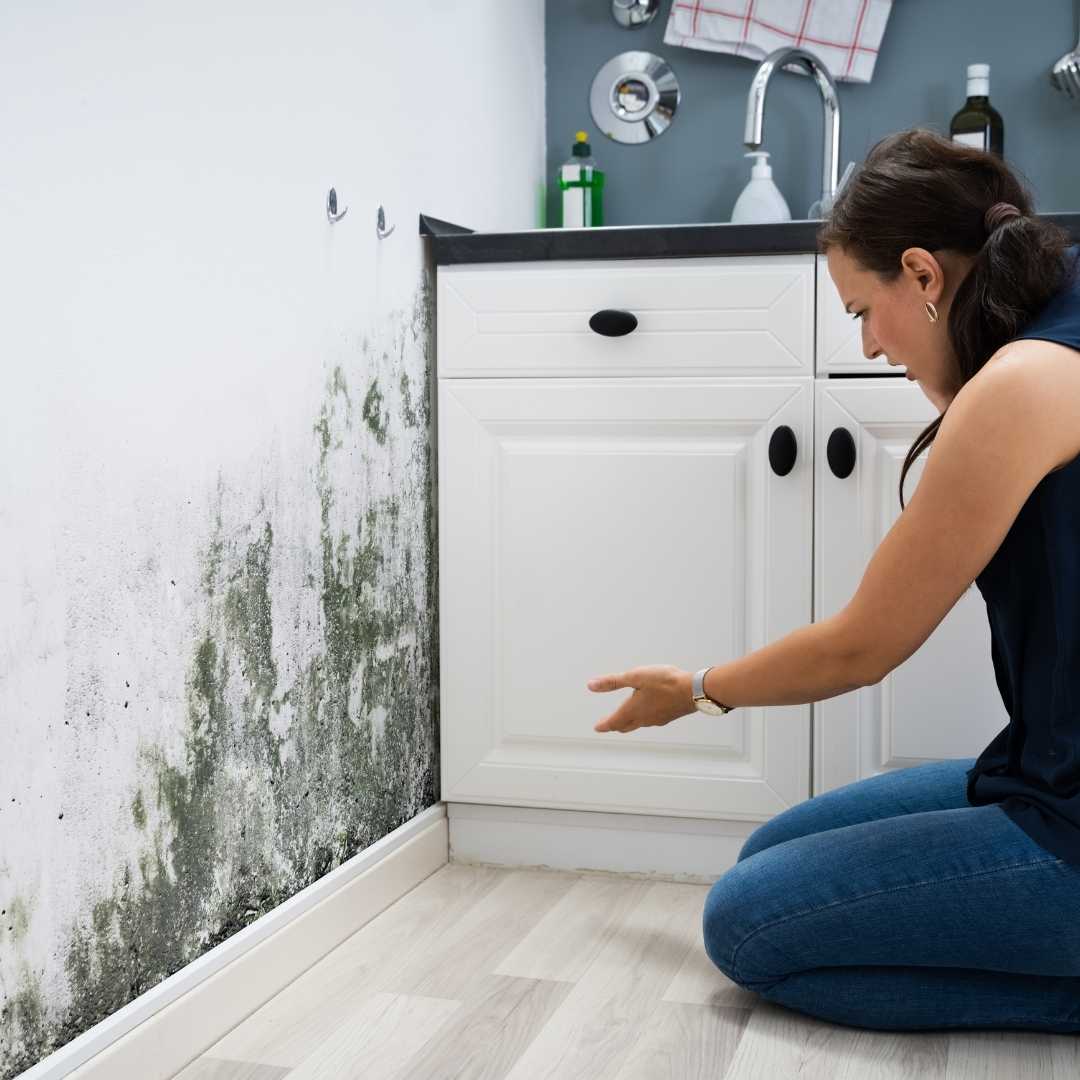
Woman smelling mold odor coming from her attic in Ocala, FL.

Recognizing the Signs of Attic Mold

Attic mold often develops out of sight for extended periods. Homeowners in Ocala and Gainesville should watch for these telltale indicators:

  • A persistent musty, earthy, or mildew-like odor emanating from ceiling vents, air returns, or when pulling down the attic access ladder.
  • Visible discoloration on structural elements—black, green, white, gray, or fuzzy patches on rafters, sheathing, insulation, or ductwork.
  • Water stains, dark streaks, or warped/buckled wood on attic surfaces, often accompanied by damp spots.
  • Unexplained spikes in cooling costs or reduced HVAC efficiency, as mold-laden insulation loses its thermal performance.
  • Worsening indoor symptoms like sneezing, congestion, or fatigue that seem to improve when leaving the home.

If any of these appear in your property, prompt action is critical—mold thrives and spreads rapidly in our humid environment.

The Dangers of Ignoring Attic Mold

Attic mold extends far beyond cosmetic or structural concerns. Spores become airborne and distribute through the home's HVAC system, degrading overall indoor air quality. According to health authorities like the Florida Department of Health and CDC, mold exposure can trigger:

  • Allergic reactions, including nasal congestion, coughing, wheezing, eye irritation, skin rashes, or hay fever-like symptoms.
  • Respiratory aggravation, particularly worsening asthma or causing chronic cough in sensitive individuals.
  • Irritant effects leading to headaches, fatigue, or throat irritation.
  • In rare cases with prolonged exposure or immunocompromised occupants, more severe issues like infections or hypersensitivity pneumonitis.

In Florida's pollen-rich and humid setting, these effects compound existing allergies. Structurally, mold weakens roof framing through rot, shortens roof lifespan, damages insulation (increasing energy costs), and can spread downward into ceilings, walls, or other areas if unchecked. Delaying remediation risks larger-scale damage and higher expenses.

Someone experiencing mold symptoms.

Why DIY Approaches Fall Short—and the Professional Remediation Process

Attempting attic mold cleanup with household cleaners, bleach, or basic fans often proves ineffective and hazardous. These methods rarely address hidden moisture sources, fail to remove spores from porous materials like insulation, and can aerosolize spores into living spaces without containment.

Professional remediation adheres to the ANSI/IICRC S520 Standard for Professional Mold Remediation, ensuring safe, thorough results. At North Florida Mold Remediators, our certified team follows this proven protocol for attic projects in Ocala and Gainesville:

  1. Detailed inspection and moisture mapping — Using moisture meters, infrared thermal imaging, and visual assessment to determine contamination extent, locate leaks/ventilation flaws, and identify all affected materials.
  2. Full containment — Sealing the workspace with hard containment and plastic sheeting--establishing negative air pressure to prevent spore migration to occupied areas.
  3. Continuous air filtration — Deploying HEPA-equipped air scrubbers to capture airborne particles throughout the process.
  4. Source correction — Permanently fixing moisture origins (sealing roof leaks, installing or upgrading vents, rerouting exhaust fans outdoors, adding ridge/soffit vents).
  5. Safe material removal — Carefully removing and bagging contaminated porous items (e.g., fiberglass insulation) for proper disposal.
  6. Surface cleaning and treatment — HEPA vacuuming, wire brushing non-porous surfaces, and applying EPA-registered antimicrobials to inhibit regrowth.
  7. Post-remediation verification — Bringing in certified mold assessor for clearance air and surface sampling to confirm mold levels return to normal background.
  8. Custom prevention guidance — Recommending attic-specific solutions like radiant barriers, additional insulation, dehumidifiers, or annual inspections suited to North Florida conditions.

This structured approach minimizes health risks, prevents recurrence, and protects property value. Typical attic remediation in our area ranges from $1,000–$7,000 depending on scope, accessibility, and repairs needed—far less than extensive structural fixes later.

Long-Term Prevention for Ocala and Gainesville Attics

Preventing recurrence is straightforward with proactive steps:

  • Maintain indoor humidity at 30-50% using whole-home dehumidifiers or well-tuned AC.
  • Ensure proper attic ventilation (at least 1:150 vent-to-floor ratio, balanced intake/exhaust).
  • Run bathroom/kitchen exhaust fans during and after use, venting outdoors.
  • Inspect roofs annually, especially post-storm, and clear gutters/downspouts.
  • Seal air leaks between living spaces and attic.
  • Consider mold-resistant insulation or barriers in high-risk attics.

Take Action to Deal with Attic Mold Ocala and Gainesville, FL

Attic mold Ocala is a common yet serious issue in our humid North Florida climate, but it doesn't have to compromise your family's health or your property. If you detect odd odors, stains, or suspect moisture problems in your attic in your Ocala or Gainesville home, reach out to North Florida Mold Remediators for a no-obligation inspection. Our experienced, certified team delivers fast, reliable service with transparent communication.

Protect what matters most—contact us today at 855-532-MOLD (6653) or through our website to schedule. A healthier, mold-free home starts with expert help.

News & Articles

Our Blog

Read our latest insights on mold removal and mold remediation in North Central Florida.